How do you contain a rogue AI agent?
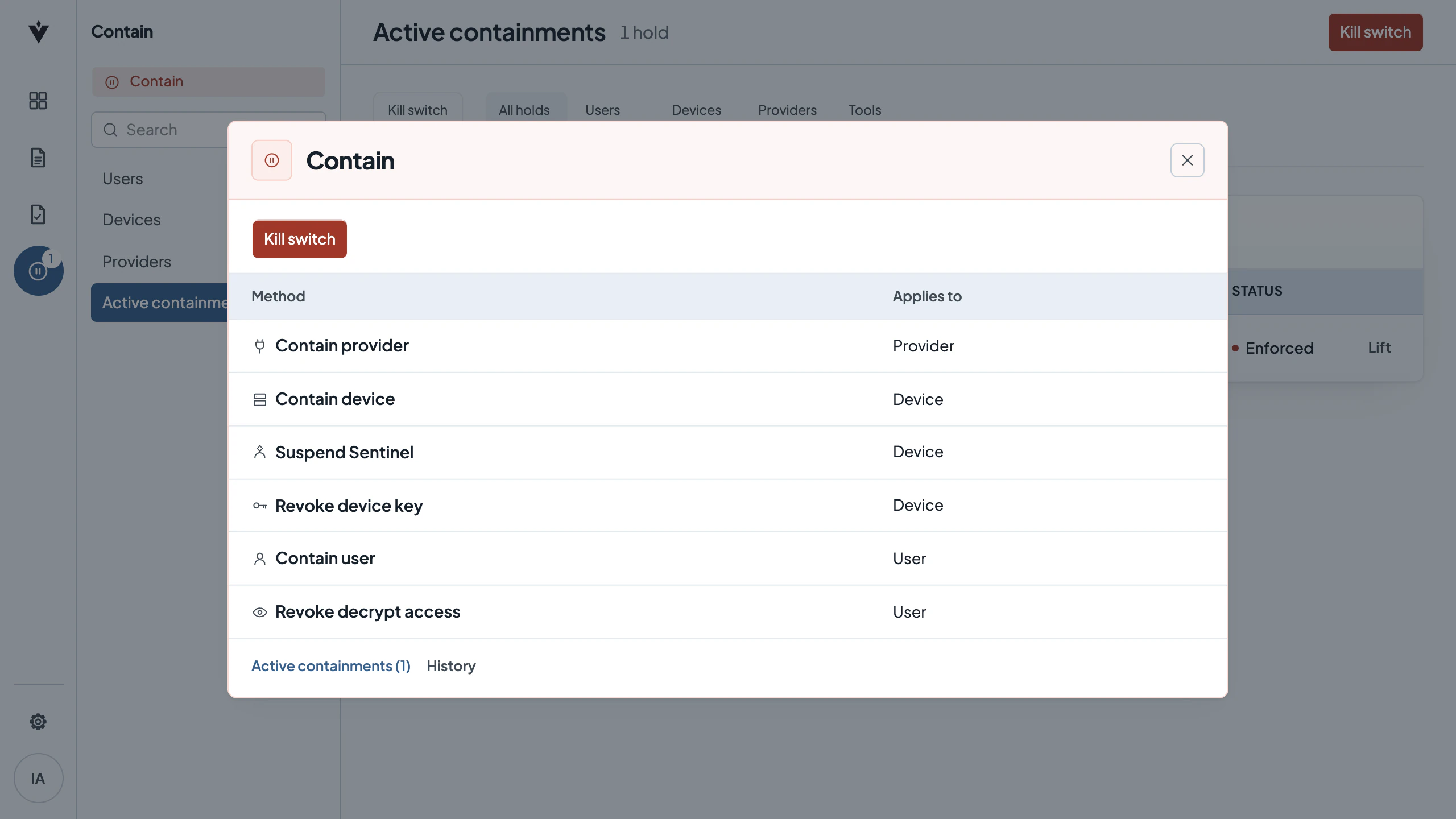
Contain its device, so it gets no more answers to act on.
What happens when an AI agent goes wrong?
It acts in seconds, with the access you gave it. Agents have already:
In one industry study, 35 percent of security leaders couldn’t shut down a deployed rogue agent.
How does an AI kill switch work?
You set it in the console, and the devices enforce it. It contains what comes next, not what’s done, so deny what can’t be undone before it runs.
What goes in an AI incident response plan?
Four steps, and containment comes first. Agents aren’t the only incidents. At a bank, a staff upload of customer data to an unapproved AI app led to an SEC filing and notices to customers. At a hospital, a worker put a spreadsheet covering 3,182 patients into a public AI tool. Plan how you’d find out, too: staff AI tools often sit in personal accounts, outside what IT watches.
Contain it.
Deny AI requests for the person, device or AI tool involved while you look into it. It takes hold at the device’s next check-in.
Preserve the evidence.
Save what was sent and returned, then ask the AI provider to delete its copy.
Size it.
Whose data left, and how much, decides who you must tell.
Report on time.
Some clocks run 36 hours from when you determine an incident must be reported. Know yours now.
How do you prove when you contained it?
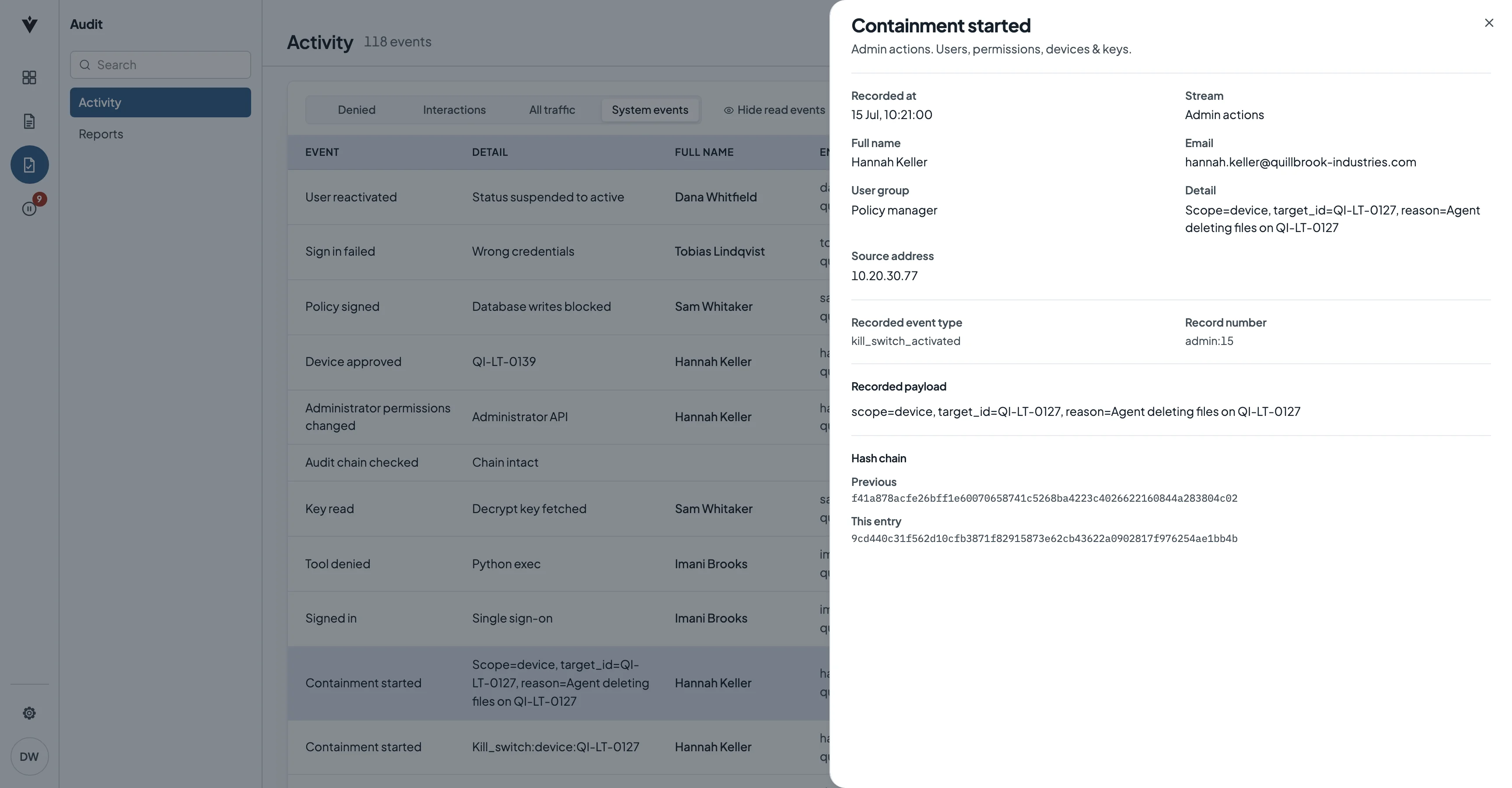
Each containment goes on your record as “Containment started”, with who set it, when and why. To investigate, open the conversation on the record: what was sent, the instructions and each tool call.
What will you be asked about containing AI?
All postsA New York City bill would ask city contractors for a way to shut down AI models.



See the kill switch before you need it.