What are staff using AI for?
The board
Captured requests by team, tool and decision.
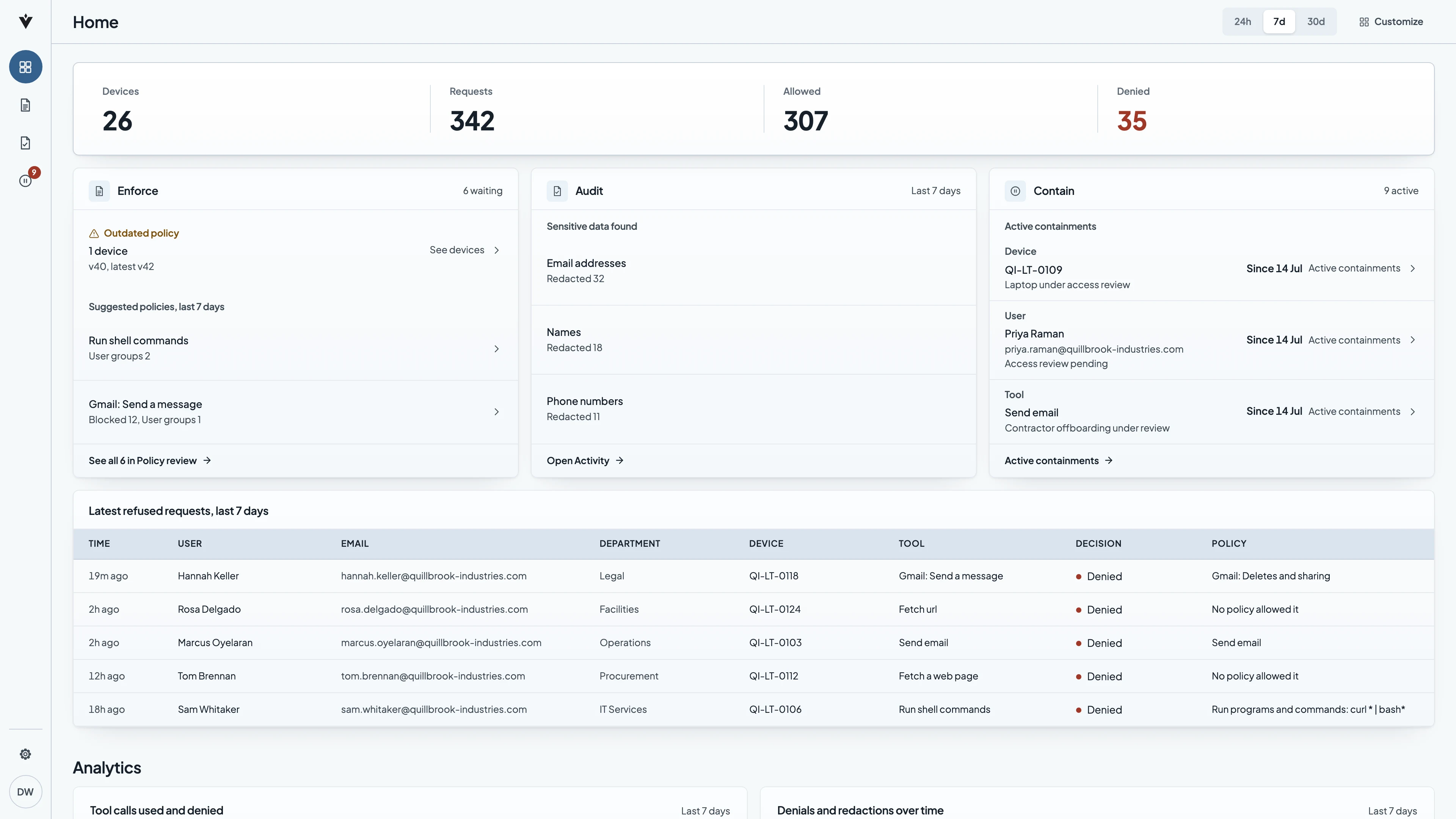
Put one AI policy on every enrolled device, and keep one record on your own servers that you can show an examiner.
Because it doesn’t wait for approval. Staff sign up for tools on their own, and vendors add AI to what you already run.
When a large electronics maker lifted its ban on a public AI chatbot in 2023, three incidents were reported within 20 days. One engineer pasted source code to fix a bug, another pasted code used to find defective equipment, and a third pasted a meeting transcript to get minutes. In May the company banned the tools again, and its memo said data on outside servers is difficult to “retrieve and delete”.
The AI provider can, on its own terms, and a court can reach it there.
In 2025 a federal court ordered a large AI provider to preserve output log data that would otherwise be deleted, including chats users had deleted. That record sat with the provider, not with the companies whose staff wrote the chats. Examiners now name one. A securities regulator’s 2026 oversight report lists storing prompt and output logs as a way to monitor AI use.
List the AI tools, the personal accounts and the AI features vendors added to software you already run.
Decide which data may go to which tools, and name one owner who answers for it.
Give staff AI tools for real work, then check the policy is followed on every device.
Whether your sensitive data went into AI, and whether your policy held.
A guide for state bank examiners asks it plainly. “Does the institution enter, process, or transmit customer, consumer, confidential, or sensitive information through artificial intelligence systems, tools, or third-party platforms?” Examiners may also ask for “information regarding monitoring and other controls”. Defense contractors hear it from their assessors too. One assessment firm lists the questions that typically decide the outcome, including “Can the organization show where prompts and outputs travel, and that access is restricted and logged?”
Each question asks what happened, so a written policy can’t answer it alone. That takes a record of what staff sent and what your policy decided, kept where you can open it for the examiner.
You set the policy, each enrolled device applies it before a request leaves, and you keep the record on your own servers. Then show what staff sent to AI, what your policy did with it, and that the record hasn’t changed. That helps you meet MS-2.8-003 in NIST’s Generative AI Profile, which asks for a log of each time AI content is changed or shared.
The board
Captured requests by team, tool and decision.
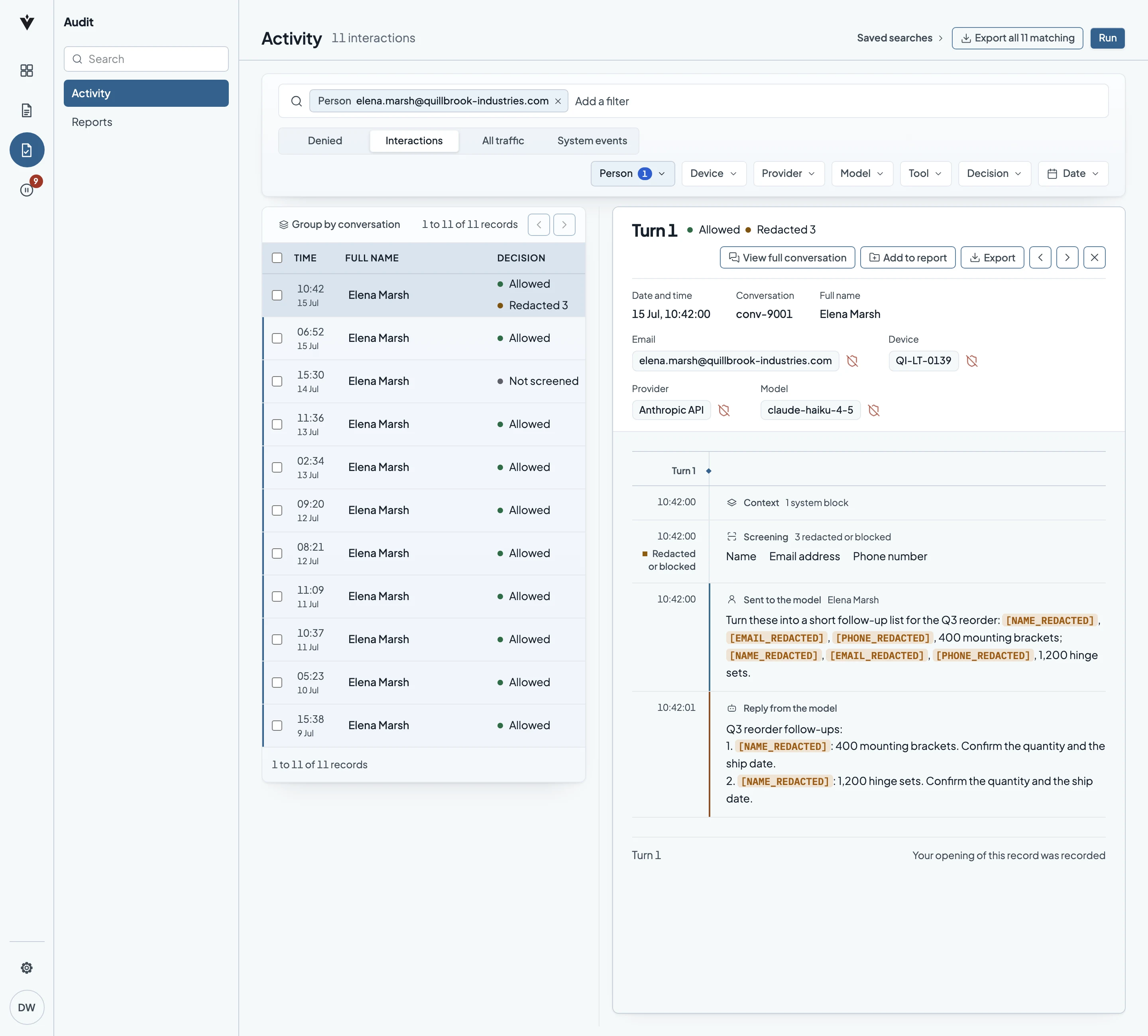
A client audit
What was sent, and what was redacted.
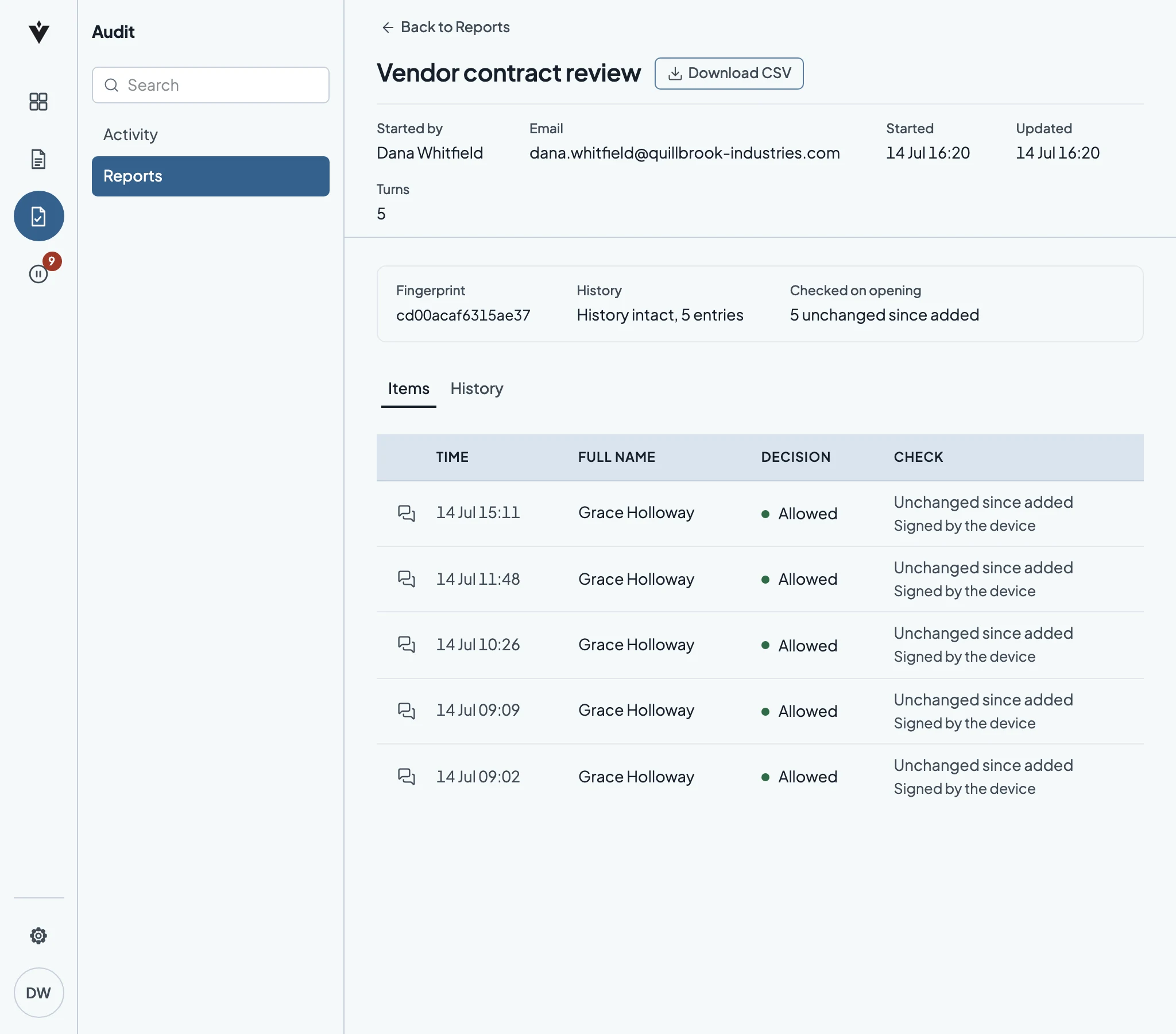
A regulator or a court
Their chats in one report, unchanged since added.
To protect regulated or client data, and to show how it was handled. Each guide takes one industry’s rules in turn.
By naming who answers for AI, and setting what staff may put into it.
Bring the question your examiner or auditor will ask.